
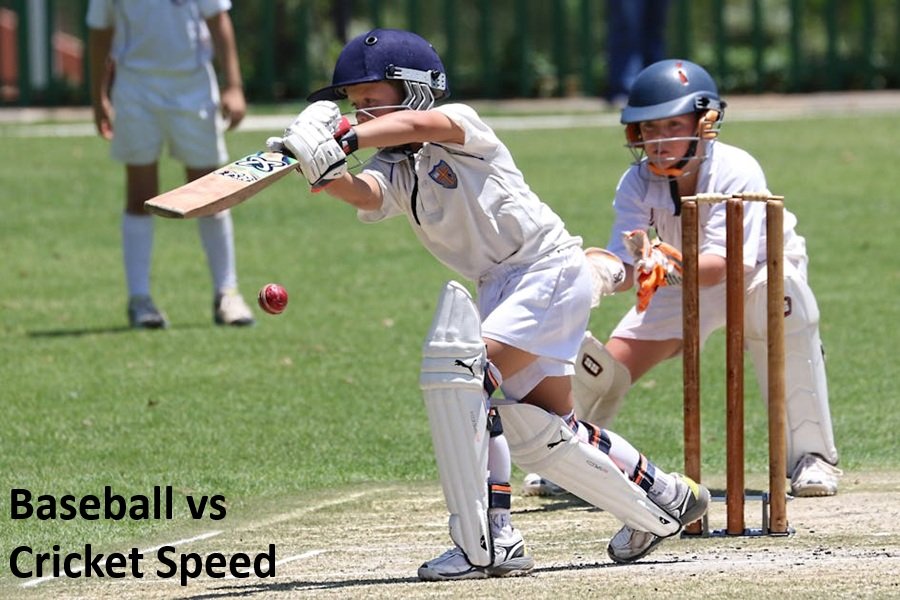

Introduction: Baseball vs Cricket Speed
Baseball vs Cricket Speed are famous bat-and-ball sports executed and discovered via masses and heaps of human beings round the sector. Both video games require notable hand-eye coordination, physical health, interest, brief selection-making, and strong batting competencies. Although they percentage some similarities, their gambling styles, device, discipline dimensions, and guidelines are pretty specific.
One interesting issue for sports fans is baseball vs cricket pace. People often wonder which activity has quicker ball shipping, which gamers react greater briefly, and which recreation calls for added pace and athletic capacity. Baseball is well-known for its mainly speedy pitches, even as cricket is ideal for its speedy bowling, swing, seam movement, and one among the types of deliveries. Comparing the 2 sports calls for searching beyond an unmarried velocity length because of the truth pitching and bowling take place below distinct situations. This article explains baseball and cricket speeds, compares their techniques, and explores the bodily competencies required with the aid of game enthusiasts in each sports activities.
1. Understanding Baseball Speed
Baseball is a sport wherein one organization throws a ball in the direction of a batter whilst the opposing group tries to hit it with a bat. The participant throwing the ball is called the pitcher. Pitching pace is one of the most vital measurements in professional baseball. A pitcher’s tempo may additionally have an effect on how much time a batter has to understand the transport and decide whether or not to swing. Professional baseball pitchers normally throw fastballs inside the sort of approximately 90–100 miles steady with hour (145–161 km/h). Some exquisite pitchers can throw even faster.
Baseball tempo relies upon on several elements:
- The pitcher’s strength and physical scenario.
- Arm motion and throwing method.
- Body rotation and balance.
- Grip and release aspect.
- Type of pitch being added.
- Training and professionals enjoy it.
Different pitches, which consist of fastballs, curveballs, sliders, and changeups, have one-of-a-type speeds and movement patterns. A fastball is usually designed to acquire the batter rapidly, at the same time as breaking pitches use changes in route to make hitting greater difficulty.
2. Understanding Cricket Speed
Cricket is another bat-and-ball endeavor, however its shipping technique is not just like baseball. In cricket, a bowler offers the ball toward a batter using an overarm bowling movement. Fast bowling is one of the most thrilling factors of cricket. Fast bowlers use tempo, jump, swing, and seam movement to task batters. Professional fast bowlers typically supply the ball at approximately 130–150 km/h. Some elite fast bowlers often acquire or exceed 150 km/h.
Read more- Humax Cricket Bat – Features, Price & Buying Guide
Cricket bowling velocity is based upon on:
- Run-up velocity.
- Bowling motion and method.
- Shoulder and arm rotation.
- Wrist characteristic and release.
- Physical electricity and versatility.
- Pitch and weather situations.
Cricket moreover includes spin bowling, wherein bowlers pay extra attention on rotation, flight, and changes in pace in desire to most delivery pace.
3. Baseball vs Cricket Speed: Direct Comparison
When comparing the two sports, baseball generally has better recorded maximum throwing speeds. However, elite cricket fast bowlers furthermore supply balls at incredible speeds. Here is an assessment of their critical pace measurements.
| Comparison | Baseball | Cricket |
|---|---|---|
| Main delivery | Pitching | Bowling |
| Typical elite fast delivery | Around 145–161 km/h | Around 130–150 km/h |
| Exceptional recorded speed | 105.8 mph (170.3 km/h) | 161.3 km/h (100.2 mph) |
| Delivery technique | Overhand pitching motion | Overarm bowling action |
| Ball size | Smaller and heavier | Larger and lighter |
| Main objective | Get the batter out or prevent a hit | Dismiss the batter or restrict scoring |
| Important skills | Pitch control, velocity and accuracy | Pace, swing, seam and accuracy |
| Playing surface | Baseball diamond | Cricket ground with a central pitch |
The fastest pitch in MLB’s pitch-tracking technology turned into recorded with the beneficial useful resource of Aroldis Chapman at 105.8 mph in 2010. In cricket, Shoaib Akhtar’s 161.3 km/h transport in the direction of England inside the 2003 Cricket World Cup is extensively identified as the fastest recorded international delivery. These figures show that baseball has the highest recorded pace. However, the evaluation does no longer mean that each baseball pitcher is quicker than every cricket bowler.
4. Fastest Recorded Speed in Baseball
Baseball has produced some of the quickest pitches ever measured in expert games. One of the most well-known examples is Aroldis Chapman, who recorded a 105.8 mph fastball in 2010. This is ready 170.3 km/h. Chapman has emerged as famous for his awesome throwing energy and functionality to supply alternatively rapid pitches. His typical performance confirmed how crucial energy, coordination, and pitching mechanics are in professional baseball.
Other pitchers have also turned out to be stated for their immoderate-pace fastballs. Modern baseball training uses generation, video evaluation, electricity sports activities, and pitching information to beautify throwing common general overall performance. According to MLB’s 2026 reporting, the common 4-seam fastball from starting pitchers reached ninety 4.6 mph all through the season. This indicates how masses pitching tempo has developed in professional baseball.
5. Fastest Recorded Speed in Cricket
Cricket has also produced legendary rapid bowlers who can supply the ball at speeds close to 160 km/h. One of the most well-known fast bowlers is Shoaib Akhtar. He recorded a shipping of 161.3 km/h in competition to England ultimately of the 2003 Cricket World Cup in Cape Town. Another well-known rapid bowler is Brett Lee. He was mentioned for his pace, aggressive bowling, and functionality to trouble global batters.
Other brilliant fast bowlers embody:
- Mitchell Starc – Known for immediate bowling and dangerous yorkers.
- Shaun Tait – Famous for his extraordinarily fast bowling movement.
- Jeff Thomson – Remembered for his frightening pace.
- Shoaib Akhtar – Famous for the drastically identified 161.3 km/h shipping.
Cricket pace data are based on velocity-gun measurements, and variations in period device and techniques can affect comparisons.
6. Which Sport Gives Batters Less Reaction Time?
Reaction time is an essential part of the baseball vs cricket speed assessment. A batter wants to select out the ball’s route, estimate its pace, apprehend its movement, and decide whether or not to hit it. All those actions arise in a completely brief duration. In baseball, a 100 mph pitch travels at approximately 160.9 km/h. The regulation distance from the pitching rubber to the domestic plate is 60 feet 6 inches. At that tempo, the ball covers this distance in approximately 0.41 seconds, earlier than deliberating the pitcher’s release element and different factors.
In cricket, a 150 km/h shipping travels at approximately 93.2 mph. The ball travels along the cricket pitch towards the batter, and the actual time to be had is primarily based upon its release factor, leap, and trajectory. Research and sports assessment show that a 150 km/h cricket transport can obtain the batter in kind of 0.48 seconds over the whole pitch length. The batter’s real choice-making time is shorter due to the fact that it takes a while to recognize the transport.
Both sports activities call for wonderful focus and speedy reactions. Their reaction-time comparisons aren’t perfectly equal due to the fact the ball travels unique distances and follows specific paths.
7. Differences in Ball Size and Weight
The system applied in baseball and cricket moreover influences how the video games are carried out. A popular baseball has a circumference of approximately 9 inches and weighs among 55.25 ounces.. It has a tough applicable form blanketed with leather-based-primarily based and seen stitching. The ball’s smaller period and manufacturing assist pitchers produce superb grips, spins, and movements. Pitchers use those trends to create fastballs and breaking pitches.
A full-size men’s cricket ball weighs between 155.9 and 163 grams and has a circumference between 22.4 and 22.9 centimetres. The cricket ball is commonly extra difficult and heavier than a baseball. Its seam and floor situation could have an effect on swing, seam motion, and spin. These device variations are crucial even as evaluating ball pace due to the reality each ball behaves in any other case for the duration of shipping and flight.
8. Bowling and Pitching Techniques
Baseball pitchers and cricket bowlers use incredible body moves to generate tempo. Baseball pitching approach A baseball pitcher uses the legs, hips, shoulders, arm, and wrist to generate throwing power. The pitcher transfers power thru the body in advance then releasing the ball toward the batter.
Important pitching techniques embody:
- Maintaining proper balance.
- Using effective leg pressure.
- Rotating the hips and shoulders.
- Maintaining a steady launch element.
- Developing arm energy and flexibility.
A cricket speedy bowler normally starts with a run-up earlier than entering into the bowling stride and liberating the ball.
The important strategies encompass:
- Building momentum sooner or later of the run-up.
- Maintaining a balanced bowling motion.
- Coordinating the shoulders and hips.
- Controlling wrist and seam function.
- Following through correctly after transport.
Although each sport relies on bodily power, their transport mechanics aren’t the same. Baseball makes a speciality of a throwing movement, while cricket makes use of a specialized bowling motion. Baseball vs Cricket Speed.
9. Which Sport Is More Difficult for Batters?
Both sports activities are tough, however they take a look at first-rate batting abilities. In baseball, batters face pitchers who can throw fastballs, sliders, curveballs, and changeups. The batter wants to come to be aware of the pitch type and determine whether or not to swing.
In cricket, batters face speedy bowlers, swing bowlers, seam bowlers, and spin bowlers. They ought to additionally alter their footwork and shot preference relying on soar, line, period, and ball motion. Cricket batters also want to play defensive snap shots, attacking images, and walking snap shots at a few degrees within the identical innings. Baseball batters typically pay attention to hitting the ball into the sphere and achieving bases. Both sports activities require years of exercising to make bigger expert-diploma batting skills.
10. Speed in Different Playing Conditions
Speed isn’t always the first-class issue that determines overall performance. Playing conditions can also have an effect on how tough a shipping is to face. In baseball, climate, humidity, ball grip, and pitching approach can impact pitching normal performance. In cricket, pitch situations, wind, humidity, ball scenario, and atmospheric situations can impact bowling and batting.
For example, a quick bowler might also generate more motion with a modern cricket ball. Similarly, a baseball pitcher may additionally use unique grips to create motion and mislead the batter. This is why expert game enthusiasts observe conditions earlier than suits and modify their strategies for that reason.
11. Training Methods for Improving Speed
Players in each sports activity study specialised education programmes to beautify their performance.
Baseball education regularly consists of:
- Strength training and resistance carrying activities.
- Shoulder stability bodily sports activities.
- Sprinting and agility schooling.
- Throwing workout.
- Pitching mechanics and video assessment.
Cricket training regularly includes:
- Run-up and bowling practice.
- Lower-frame energy education.
- Core balance sports.
- Sprinting and versatility schooling.
- Bowling accuracy and pace improvement.
Proper restoration is also essential. Excessive throwing or bowling can increase the hazard of shoulder, elbow, back, and muscle injuries. Players should increase their education intensity little by little and comply with professional training advice.
12. Baseball vs Cricket Speed: Final Verdict
When evaluating baseball vs cricket velocity, baseball has the gain in terms of the very quality significantly recorded expert pitching tempo. Aroldis Chapman’s 105.8 mph pitch is approximately 170.3 km/h, on the identical time as Shoaib Akhtar’s well-known cricket transport reached 161.3 km/h. However, cricket remains an extremely rapid activity. Professional speedy bowlers often deliver balls at speeds that require wonderful reflexes and batting capabilities.
The sports activities can not be judged excellent through the use of their most speed facts. Pitching distance, bowling distance, ball creation, delivery techniques, and movement all have an effect on how hard a transport is. Baseball is particularly first-rate for its excessive pitching tempo and style of pitches, at the same time as cricket combines fast bowling with swing, seam motion, soar, and spin. Overall, baseball is faster by means of the high-quality recorded delivery tempo, but every baseball and cricket requires extraordinary tempo, coordination, and athletic functionality.
Frequently Asked Questions (FAQs)
1. Which game is quicker, baseball or cricket?
Baseball has the best extensively recorded expert transport pace. Its fastest pitch in MLB’s pitch-tracking generation reached105.8 mph, in assessment with cricket’s widely diagnosed 161.3 km/h delivery.
2. What is the quickest baseball pitch ever recorded?
Aroldis Chapman recorded a 105.8 mph fastball on September 24, 2010. This is set at 170.3 km/h.
3. What is the quickest cricket ball ever recorded?
Pakistan’s Shoaib Akhtar brought a ball recorded at 161.3 km/h in opposition to England at a few degrees inside the 2003 Cricket World Cup.
4. Is cricket bowling quicker than baseball pitching?
Generally, no. Professional baseball pitchers can benefit from higher delivery speeds than most cricket fast bowlers. However, elite cricket bowlers also can gain speeds above 150 km/h.
5. Which endeavor calls for faster reactions?
Both sports activities require super reactions. The real time to be had relies upon shipping pace, distance, launch detail, and ball motion.
6. Why is baseball pitching so rapid?
Baseball pitchers generate tempo via coordinated leg stress, frame rotation, shoulder motion, arm motion, and wrist mechanics.
7. Can a cricket bowler throw a ball at 170 km/h?
No internationally identified cricket delivery file presently exceeds 161.3 km/h. Reaching 170 km/h would be a fantastic success.
8t. Which endeavor is extra hard for batting?
Both sports are tough in particular strategies. Baseball calls for batters to apprehend unique pitches, at the identical time as cricket calls for gamers to deal with super bowling styles, soar, swing, and spin



Pingback: Cricket Ball vs Baseball: Which Ball Is Harder? - Cricket Bat Ball